Greenflame

Jottings on science, religion, technology, pop culture, photography and faith from the Aotearoa New Zealand

  • Religion and Comics – A Top 10 (Part 1)

    Kingdom Come

    • Publisher: DC Comics
    • Writers: Mark Waid & Alex Ross
    • Artist: Alex Ross
    • Letterer: Todd Klein

    Kingdom Come pretty much has everything you could want in a comic: Interesting characters; familiar characters recast by circumstance; conflict; sacrifice; an apocalyptic edge; great art; redemption; and excellent storytelling. It’s one of my go-to comics for showing people what a graphic novel or comic series should be. (more…)

  • Religion and Comics – A Top 10

    I picked up a few comics and graphic novels in the past couple of months that have various religious themes, characters and motifs, so I thought I might do a Top 10 list and subsequent postings for my favourite comics with religious and spiritual material. This is the list of comics that I tend to refer people to when they ask what might be interesting to look at. It does not include comic and graphic novel forms of the Bible, discipleship or tract material – that is another set of postings. Here’s my list which I’ll comment on over the next week or so. (more…)

  • Pondering angels

    One of the final writing projects of research leave is to put to bed a book chapter on angels and popular culture that I’ve been working on in fits and starts. I’ve tried a few ideas out as conference papers (Greenflame: All about angels this fortnight), as well as in the classroom and church contexts, but have been looking for a unifying theme to wrap this essay around.

    (more…)

  • Childhood Science Fiction: Television (Part 12)

    The final post on science fiction television influences from my childhood today, and I’ve left the biggest to last: Star Trek.

    And bonus section on comic book science fiction show crossovers. (more…)

  • Childhood Science Fiction: Television (Part 11)

    I remember watching both of these shows, though not with any real recollection. Certainly, Planet of the Apes was repeated at some point, and I can remember eating the orange-chocolate ice creams that came with the Planet of the Apes stickers (See Childhood Science Fiction: Ice Cream). Ark II was just some sort of filler in the afternoon viewing schedule. So, just some basic information for this post. (more…)

  • Childhood Science Fiction: Television (Part 10)

    When we moved to NZ we didn’t have a TV (apart from a rental during the Commonwealth Games when they were in Christchurch), so I’d often be around at my friends houses watching TV with them. These are three of the shows that I remember from that time, though I kept watching them when we got a television. Two are set in outer space: one on a world just like ours except for one difference; the other set on a different (but often similar) planet every week. The other in different points of Earth’s history. All were created by Irwin Allen (who was also responsible for the Voyage to the Bottom of the Sea series) (more…)

  • Teaching Spirituality and Wellbeing

    During my years of theology lecturing I’ve had the opportunity to teach a number of courses in the area of Christian spirituality, as well as do some research connected to that. (Back in the day as a BD student I did the Spiritual Formation Integrated Fieldwork (IFE) option in my final year, rather than the typical theological teaching option taken by BD students).

    The courses I’ve taught include:

    • Expressions of Christian Spirituality (University of Auckland)
    • Spirituality in Aotearoa New Zealand (University of Auckland)
    • Spirituality and Wellbeing (University of Auckland)
    • Historical and Contemporary Models of Spirituality (Laidlaw College)
    • Christian Spirituality and Wellbeing (Laidlaw College)

    Some of these courses were ones I inherited, others I co-taught with colleagues, sometime I covered them when a colleague was on sabbatical, but over the years I have made them distinctively mine each time I have taught them.

    As an aside, the Spirituality in Aotearoa New Zealand course was a course that a colleague and I developed as a blended course that integrated online and on-campus students. It was developed around three core modules, and a smaller fourth module:

    1. An introduction to spirituality, and in particular, Christian spirituality.
    2. Indigenous spirituality;
    3. Peace and peacemaking;
    4. Everyday spirituality;

    The course used extensive multimedia resources we developed and curated that allowed students to work individually and collaboratively on tasks related in the modules (e.g. The peace and peacemaking module had a section exploring ‘Anzac spirituality’, including analyzing how different media outlets covered Anzac Day). For the on-campus students, there was three hour teaching block each week split evenly between lecture and computer lab time. Was a good course at developing relationships between online and on-campus students, as well as

    Over this summer, I’ll be teaching the Masters level course, Christian Spirituality and Wellbeing. The course has its origins in the University of Auckland course I taught three times, and this year I’ve spent a lot of time updating the topics and related materials to include more recent local scholarship from Aotearoa New Zealand, the Pacific Islands, and Australia. The problem, of course, is that I can’t cover every topic, and in fact, every topic is worth a course in itself. I had to drop the spirituality and children module, as well as the material on spiritual addiction, though I’m sure they’ll come up in discussion. The spirituality and identity section has been enlarged though, and spirituality and sport has been expanded to reflect on the human body more broadly.

    The course is always a joy to teach – for example, one year I had someone in to talk about tikanga in medical research – and I learn a lot from each cohort of students. This time the course looks like this:

    R402.830 Christian Spirituality and Wellbeing

    NQF Level: 8 Credit Value: 30

    COURSE DESCRIPTION

    Christian spirituality reflects the integration of beliefs, value and practices oriented around the person and work of Jesus Christ. This course critically examines the relationship between Christian spirituality and personal and communal wellbeing. It examines how the practice of Christian spirituality contributes positively to the notion of wellbeing, as well as how it might function negatively. Topics covered include Christian spirituality in relation to food and hospitality, sport and recreation, the marketplace, health and medicine, and sexuality.

    COURSE TOPICS

    • Course introduction: Spirituality and wellbeing
    • Spiritual but not religious?
    • Spirituality and identity
    • Theological perspectives on wellbeing
    • Spirituality and the dark night of the soul
    • Spirituality, disability and healthcare
    • Spirituality and the marketplace
    • Spirituality and the body
    • Spirituality and hospitality
    • Spirituality and sexuality

    Formal enrollment for credit is now closed, but there may be a few places for non-formal students (audit) for the teaching block after New Year over 14-19 January 2019. Contact the Laidlaw Graduate School to check.

  • Childhood Science Fiction: Television (Part 9)

    Two more shows today. One a classic and the other somewhat more obscure.


    Battlestar Galactica (1978-1981)

    battlestar-galactica-1978-movie-poster

    There’s this thing called Star Wars, they said. We want one, they said. And not just a film, but a TV series. And so we got Battlestar Galactica from Glen A. Larson and ABC.

    It was everything kids who’d seen Star Wars were wanting. Space battles! Robots! Brave warriors! Heroes and rogues! Wise, elder statesmen (and it was men)! Dogs Daggits! Robot Daggits! Lasers! Traitors! Weekly peril! And they were looking for us (Earth)!

    We didn’t mind that they kept recycling the special effects or that Starbuck was a two-timing sleezebag or that Boxey really should have been killed off as soon as possible or that the supposed master race of artificial intelligences were incredible stupid.

    (more…)

  • Childhood Science Fiction: Ice Cream

    The 1970s were a time when every cool science fiction show had an ice cream or ice block (lolly). There were stickers and games associated with them too.

    Here are a few I remember.

  • Childhood Science Fiction: Television (Part 8.2)

    Image result for space 1999 eagle

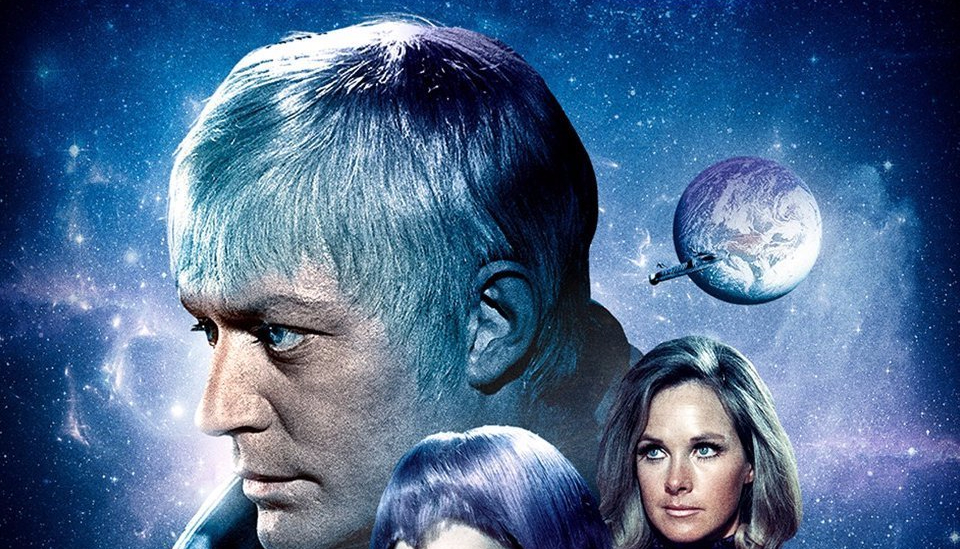
    Having cut their teeth on the Supermarionation of Thunderbirds, Joe 90, Captain Scarlet, and Stingray, Gerry and Sylvia Anderson turned their attention to live-action science fiction with the TV series – UFO and Space 1999, as well as the action-adventure show, The Protectors, featuring Robert Vaughan. (more…)