Greenflame

Jottings on science, religion, technology, pop culture, photography and faith from the Aotearoa New Zealand

  • Childhood Science Fiction: Television (Part 8.1)


    anderson-stamps-2

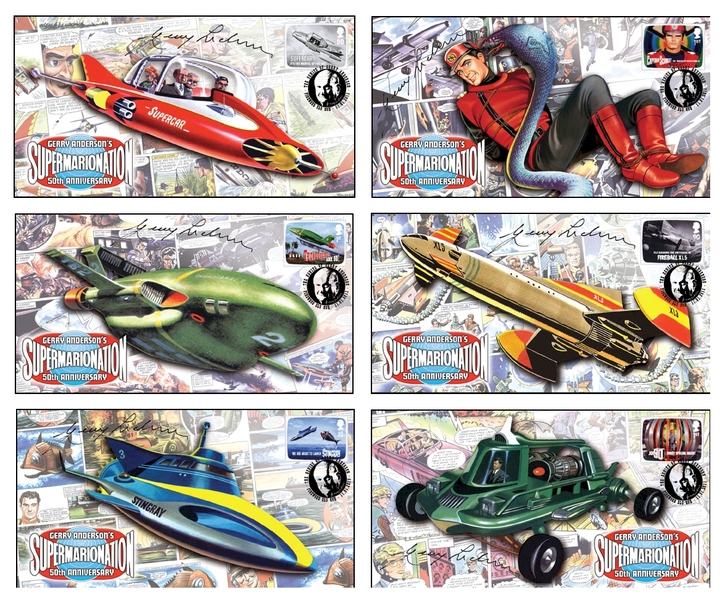
    This particular post is dedicated to the shows developed by Gerry Anderson and his team. My earliest recollection of these is watching Captain Scarlet in black and white, followed a few years later by Thunderbirds, Stingray and Joe 90. I have no recollection of ever watching Supercar, The Secret Service, or Fireball XL5, but I do wish I hadn’t watched Terrahawks. Most of these are made with “Supermarionation” that used puppets to tell action/adventure stories.

    The live action show UFO remains one of my favourite television shows of all time, and Space 1999 occupies a similar spot – though mostly I read novels connected to that, rather than watching the TV show. This post (8.1) concerns the puppet-based shows. (more…)

  • Childhood Science Fiction: Television (Part 7)

    A few more of the science fiction television influence in my preteen years. This time around we encounter invisible men and secret agents with superpowers.


    David_McCallum_Melinda_Fee_Craig_Stevens_The_Invisible_Man_1975The Invisible Man  (1975)

    This was my first encounter with the actor, David McCallum, having been a little two young to see him reprise his role as Russian agent, Illya Kuryakin, in The Man from U.N.C.L.E.. My next encounter was him playing Steel in Sapphire and Steel mentioned back here. (more…)

  • Childhood Science Fiction: Television (Part 6)

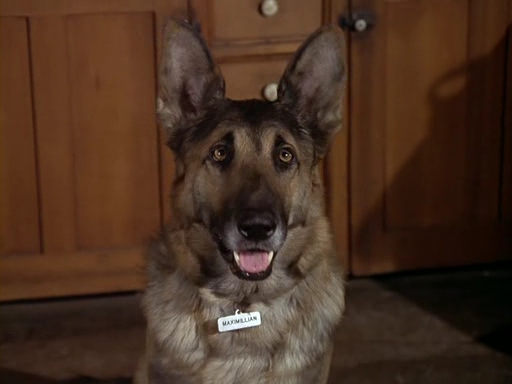
    More bionic and psychic abilities today. Does anyone remember Max(imillion) the Bionic Dog?


    The Tomorrow People (1973-1979)

    One of the highlights of my childhood science fiction watching, The Tomorrow People introduced the scenario of children hitting puberty developing psychic powers. These included teleportation, telekinesis, telepathy, and some other psychic traits, as well as an inability to take human life. Every school child’s dream – to wake up and be able to read minds and teleport. (more…)

  • Celluloid Spiders

    spiderInspired by the latest Doctor Who episode, we venture into film and television which have featured our favourite(?) eight-legged arthropods. Of course, arthropods includes crustaceans, so your favourite arthropod might be lobster served with garlic butter or the classic shrimp cocktail, but then you might be interested in a deep-fried tarantula on a stick instead.
    Strangely enough the option of eating our way to victory over our eight-legged potential overloads is an under-explored option in film. (more…)

  • Childhood Science Fiction: Television (Part 5)

    This instalment is a smorgasbord of television shows that filled in some of the gaps of childhood viewing but with some pertinent life lessons for the younger viewer.

    Things I learned from these shows:

    1. Don’t ever get in a boat;
    2. If you end up in a boat, you will most likely be:
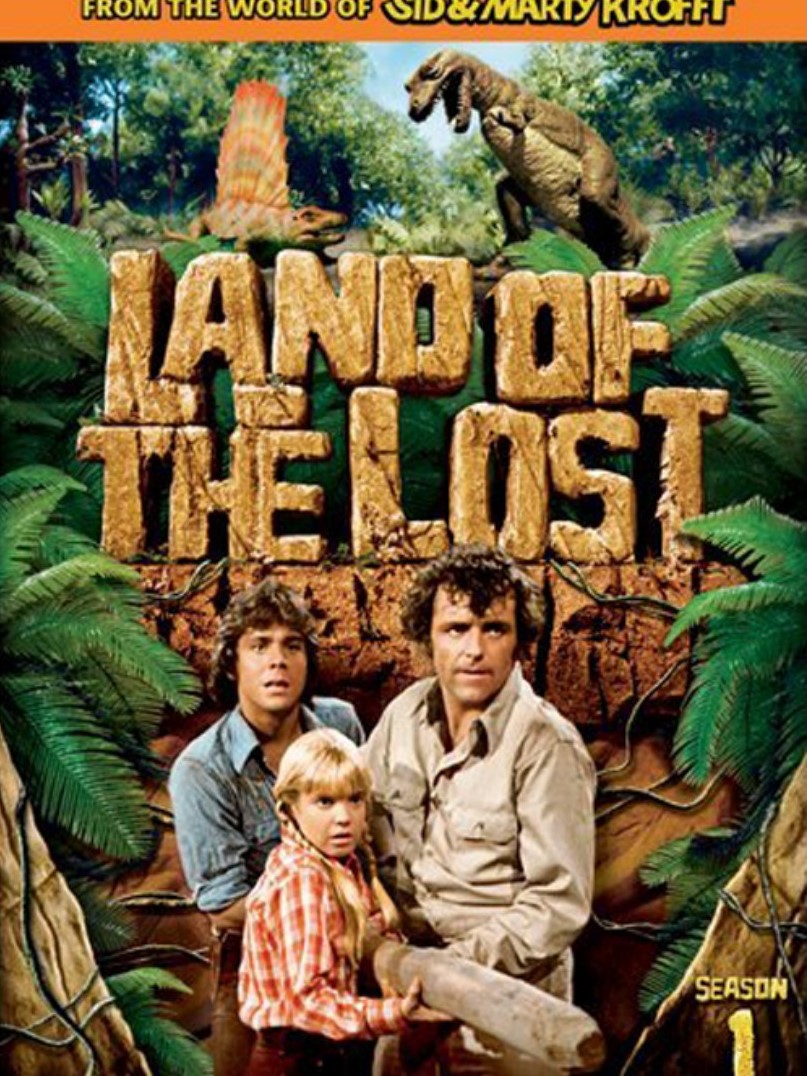
      • Eaten by a dinosaur, or
      • Shot at by laser guns, or
      • Under the sea with the threat/event of nuclear war, or
      • Captured by stone age/future people/primates/lizard people.
    3. You can’t get back in a boat from wherever you ended up.
    4. See also the H.R. Pufnstuf and Gilligan scenarios.

    (more…)

  • Childhood Science Fiction: Television (Part 4)

    Scary science fiction is back on the agenda today, as well as Greek mythology crashing into science fiction superheroes.


    sapphire_steelSapphire and Steel (1979-82)

    If Children of the Stones scared kids to death, then Sapphire and Steel nailed their coffins well and truly shut. Many nursery rhymes have gruesome or unpleasant origins, but this took it to the next level with nursery rhymes and time loops trapping people in executions and the Black Death.

    The premise of the show was not entirely revealed. We have agents (known by the names of agents or compounds) sent by some external body to make sure that time runs smoothly and the deal with anomalies. The two protagonists, Sapphire (Joanna Lumley) and Steel (David McCallum), deal with a number of these anomalies, then final one of which is a trap that has been set specifically for them. They are joined by other agents – Lead and Silver – at different times, which each agent manifesting different powers. It is unclear whether the anomalies are the product of a deliberate opposition or simply Time itself. (more…)

  • Childhood Science Fiction: Television (Part 3)


    In this post we are sent spiralling into the 25th century to join a 1930s spaceman dragged into the 2400s via 1979.


    Buster.jpgBuck Rogers in the 25th Century (1979-81)

    In 1979 Buck Rogers blasted across our TV screens as media companies attempted to cash in on the buzz generated by Star Wars. For some this meant doing something newish (like Battlestar Galactica – a western in space in cinemas and then TV), but for others this was an opportunity to recycle existing movie heroes. In 1980, Flash Gordon hit the big screen, with accompanying theme song from Queen, in Flash Gordon (1980) directed by Mike Hodges, but the year before Buck Rogers was doing it on the small screen.

    My first encounter with Buck Rogers was, however, not this TV series but rather the 1939 movie serial that had an episode played each day on holiday TV. The lead character of Buck was played by Larry (Buster) Crabbe, the Olympic swimmer who’d played Flash Gordon in two previous films. (I also grew up on the exploits of the ultimate space opera hero – Dan Dare). (more…)

  • Childhood Science Fiction: Television (Part 2)

    Part 2 of childhood science fiction influences. This time the action hero we all wanted to be, the programme is possibly the scariest children’s TV show ever, and then we go swimming.


    majors-six-million-dollar-manThe Six Million Dollar Man (1973-78)

    Steve Austin – astronaut, secret agent, bionic man. We all wanted to be him in the playground. We all made ‘bionic’ noises while jumping over things. We would all sacrifice (literally) our right arm to be him.

    I had a poster on my wall. I had the action figure with the cool bionic eye you could look through from the back of its head and the fake skin that peeled away to show the bionics in his arm. I even did the ride at Universal Studies.

    Some 40 years on when I’m researching transhumanism and human enhancement, Steve Austin walks beside me. My favourite episodes were the ones where he fought the robots that replaced people, when he found other bionic people (“The Seven Million Dollar Man“) and, of course, the Bigfoot alien story line.

    (more…)

  • Childhood Science Fiction: Television (Part 1)

    I’ve been reading, watching and playing with science fiction media ever since I can remember. In part, that’s from growing up as the manned missions to the moon were happening. I have a distinct memory of my mother getting me up in the middle of the night to watch the Apollo 17 moon landing, models of a Saturn V rocket and lunar lander my father had made, and books and posters of rockets and visions of the future. For me, it was just natural to fall into science fiction.

    Most of my pre-teenage years were in the 1970s, a grand time for science fiction television shows, though in New Zealand we often got them a while after the UK and US.


    LogansRunLogan’s Run (1977-1978)

    I never saw the 1976 Logan’s Run film as a child, but I watched the TV show (and read some of the novels that were produced from the movie). I can’t remember the details of individual episodes, but do remember the ongoing sense of being hunted by the Sandmen that ran from week to week.

    Obviously, the show got cancelled before the end of its first season but it was a “must watch” as a child. I seem to remember Logan’s Run toys in the shops, but can’t seem to track any down online now. (more…)

  • Theological Science Fiction – Starting Points (Part 4)

    The final part of starting points for reading science fiction with religious themes.


    chaplainThe Chaplain’s War – Brad R. Torgersen (2014)

    This is effectively military science fiction in a similar vein to Joe Haldeman’s The Forever War (1974), Keith Laumer’s Bolo universe (1976-2010),  Robert Heinlein’s Starship Troopers (1959), and Jack Campbell’s The Lost Fleet (2006-2010) series.

    Here the protagonist is not a super soldier, but rather an chaplain’s assistant who has to prevent humanity’s extermination through argument and by possessing religious faith. (more…)